Storm Alerts and School Board Fights: Local News Quietly Became a Free-Streaming Powerhouse
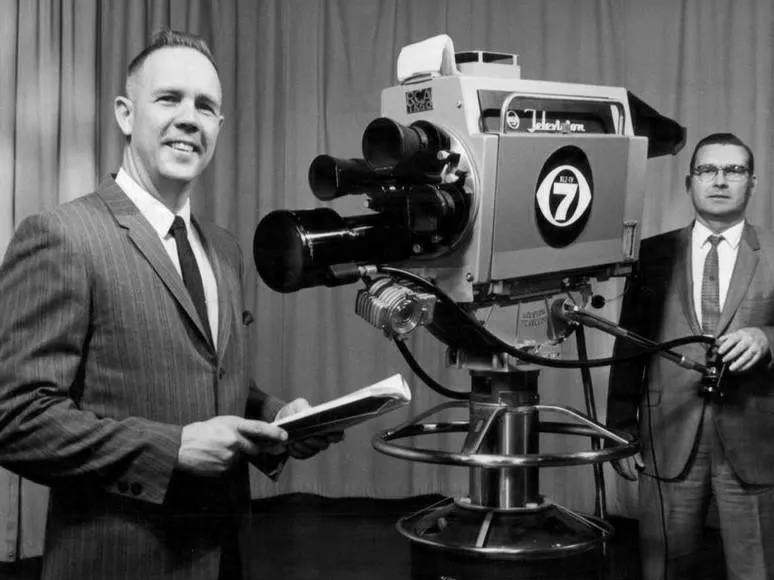
Photo: KLZ-TV, Denver., Public domain, via Wikimedia Commons
Ask someone what they watch on the free streaming apps and you'll usually get the same answer: a cooking show, a procedural rerun, maybe a channel that plays nothing but a fireplace.
Ask around long enough and someone will mention the weather. Specifically, their weather. As in, the forecast for the county they live in, delivered by a person who pronounced the name of their town correctly.
That's the thing quietly happening across free ad-supported streaming services in the US right now, and it's a bigger shift than it gets credit for.
What's Actually On
The genre is loose and the lineup changes month to month, but the shape is consistent: channels built around a local or regional station's news operation, weather channels that loop conditions for a metro area, and community feeds heavy on high school football, city council meetings, and whatever the local diner is doing.
The national platforms have been steadily adding this kind of programming to their free tiers. Some of it is branded around a big network's local affiliates. Some of it is a station group putting a handful of its markets online. A fair amount of it is weather-first, which makes sense — weather is the one form of local news that has no national substitute.
And crucially, it's free. No login, no password, no bundle. You land on the channel, you watch, you leave.
Why Storm Coverage Wins
Weather is the original appointment television. There's no algorithm that can replicate the specific dread of a county map turning red while a meteorologist points at a wall.
That's the emotional hook. National streamers can give you a gorgeous documentary about hurricanes. They cannot tell you that the cell is tracking twelve miles north of your neighborhood and will reach you in about forty minutes. That's a fundamentally local product, and it's exactly the kind of thing people will tolerate ads for.
Tornado season, hurricane season, the first snow of the year, the summer heat dome — each one is a reliable spike in attention. Stations know this. So do their new streaming partners.
The School Board Audience Is Real
The other half of this is civic. Board meetings, zoning fights, budget votes, the ongoing saga of whether a town is getting a roundabout.
Most of that content would never survive a traditional broadcast slot. It's too long, too niche, too unglamorous. But on a free ad-supported channel, 'too niche' is basically the business model — you don't need a huge audience, you need an audience that shows up reliably and doesn't mind a mattress commercial every eight minutes.
There's a nostalgia play buried in here too. A lot of viewers grew up with the 11 p.m. news as a household ritual, and they miss the feeling of somebody telling them what happened nearby. The big streamers never sold that. Your local station's free channel does.
The Station Economics Are the Real Story
Local news has spent two decades getting squeezed. Ad dollars migrated, classifieds evaporated, and the whole model got propped up by retransmission fees from cable and satellite.
Free streaming gives stations something they haven't had in a while: a distribution channel they control, that reaches people who don't pay for television at all. The ad rates are lower than broadcast. But the inventory is nearly limitless, and the costs of filling it are marginal when you already produce the newscast.
That's why you're seeing station groups treat these channels less like an experiment and more like a second home. The content already exists. It just needs a place to live.
What It Means for the National Players
The big services have a strange incentive here. Local news doesn't drive subscriptions the way a prestige drama does, but it drives sessions — the boring, valuable metric of people opening an app and staying on it. It also makes a free tier feel like a utility rather than a rummage bin.
And there's a competitive angle. If a platform can plausibly claim to be where you go when the sky turns green, it has carved out a spot in your habits no amount of expensive original programming can buy.
The Catch
None of this is a rescue mission. A streaming channel is not a newsroom. The jobs that were cut in local TV over the last twenty years don't come back because a station got a FAST slot, and a lot of these feeds are recycled newscasts with a new wrapper.
There's also a discovery problem. Free streaming interfaces are a maze, and local channels are frequently buried three scrolls deep next to a channel showing nothing but fail videos. The people who find them love them. The people who don't, never will.
Watching What's On, Again
Still, there's something quietly nice about the whole thing. For a while it looked like 'watch what's on' was going to mean 'watch whatever an algorithm picked.' Local news on free streaming is a small counterargument — a place where the thing that's on is determined by geography and weather rather than a recommendation model.
Which is a very long way of saying: the most interesting channel on your free app this week might be the one showing a school board meeting and a radar loop. No subscription. No algorithm. Just the county, in real time.